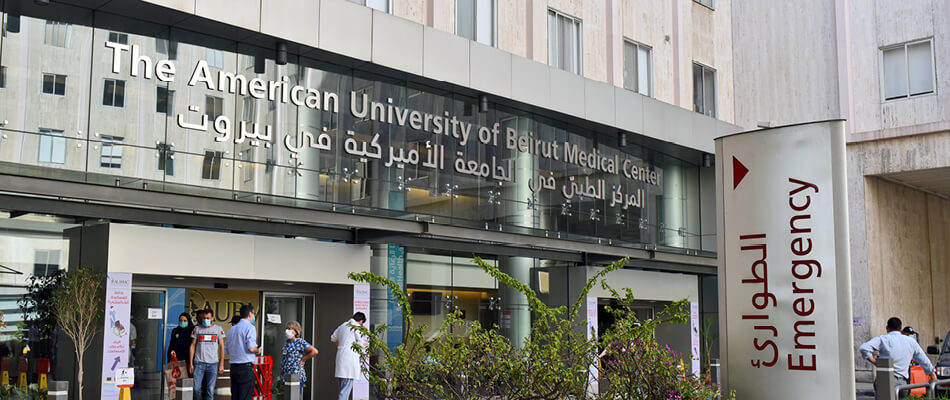
The American University of Beirut Medical Center (AUBMC) was once again met with an unanticipated flood of emergency cases that emerged from a barrage of attacks on several civilian areas across Lebanon, including Beirut, on April 8. Dr. Salah Zein-El-Dine, chief medical officer at AUBMC, describes the medical need that quickly surged and the corresponding response at the medical center.
Shortly after 2:00 pm, multiple Israeli airstrikes hit Beirut and other areas of Lebanon, with more than 160 missiles reported in the span of 10 minutes. Within streets that quickly filled with alarmed crowds came sirens of emergency vans that carried a flood of injured victims. A total of 72 trauma cases were delivered to the AUBMC emergency department.
No strangers to crisis response, multidisciplinary teams of physicians and nurses rushed from various departments, including emergency, nursing, quality and patient safety, and surgery. Two hundred and fifty members of the AUB community, mostly AUB and medical students, rushed to donate blood, following AUBMC's call. By 2:34 pm, AUBMC activated the disaster response protocol, Code D-partial, subsequently as a full activation. This enabled a hospital-wide response until 4:07 pm, coordinating structured workflow, resource allocation, and real-time troubleshooting, even as the influx of casualties intensified.
AUBMC closely aligned with the Lebanese Ministry of Public Health's Emergency Operation Center which issued early alerts and coordinated ambulance dispatch. For five hours, patients were brought in, one passed away shortly after arrival, in addition to five others who were dead on arrival. Eighteen at-risk operations were conducted within the following 48 hours and 29 patients were admitted to receive intensive and continued care, including a child who was transferred immediately to the pediatric intensive care unit. To this day, 12 patients continue to receive hospital care.
During crisis response on April 8, AUBMC was placed in diversion for only 45 minutes (declaring overwhelm or inability to receive more patients during that time). This reflects the efficiency and agility developed over years of cumulative crisis response experience. Over the past seven years alone, AUBMC has catered to an immediate and overwhelming surge of injured patients from the August 4, 2020 Beirut port explosion, in addition to 160 critically ill COVID-19 patients who came in at once, as well as severely impacted war victims during the war from September through November, 2024.
In a recent live interview with Executive, President Fadlo Khuri spoke not only of AUBMC's acquired preparedness but of its flexibility in switching in and out of urgent care mode while maintaining a degree of normality in non-urgent care provision during and immediately after crises. The hospital and its departments have innovated to become nimble and adjust their resources to cater to not just urgent and emergent care, but also to what this year continued to be high demand by nationals from around the region for chronic and non-urgent medical treatment.
For the university and its medical center, what seemed like an immediate and well-practiced crisis management was a result of each member responsibly assuming their role and duty within a 160-year-old institution that is rooted in Beirut with a mission to serve its people. As for the excellence with which they did it, there was no time to adequately appreciate it, nor was there an alternative. As Dr. Zein-El-Dine put it, “You don't know how strong you are until being strong is the only option you have."